
Ocean Column: The sea has changed, is it the jellyfish?
Jellyfish have been a part of Earth’s marine ecosystem for at least 500 million years; however recent spikes in their populations serve as a warning for marine life and a possible future that puts other fish at a disadvantage. Join Harsh as he dives into the origin of jellies, their growing abundance and what it does to the marine ecosystem.
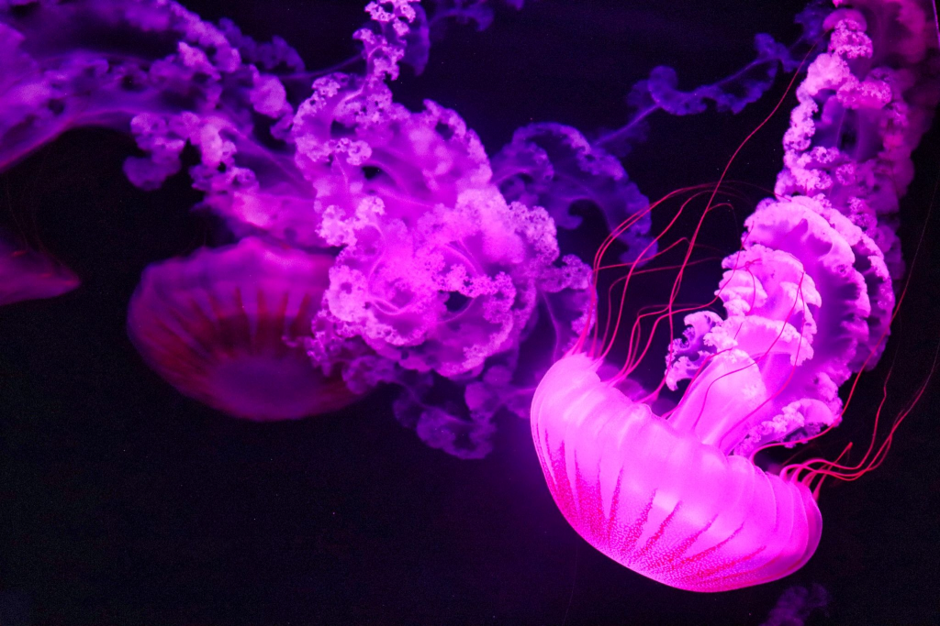
Jellyfish by aiamkay - Pixabay
Centuries ago, English speakers described almost any creature living exclusively in water bodies as fish. This is how the jellyfish earned its name, despite not being a fish at all. The word jelly, of course, has been aptly used to describe their physical appearance.
Jellyfish embody the complexity and resilience of Earth’s marine life. A jellyfish has no brain, no heart or bones, yet has survived as a species for hundreds of millions of years, flexing its evolutionary resilience. In the last few decades, however, there has been a rise in the populations of these planktonic invertebrates. The population surges, also known as jellyfish blooms, showcase a shift in oceanic health and reveal the implications of human activities that are slowly but surely messing with the equilibrium of marine life.
Old friends
Paleontological evidence suggests that jellyfish first appeared 500-600 million years ago, during the late Neoproterozoic or early Cambrian era. Considering 95% of their composition is water, it is incredibly difficult to prove their long known existence with fossils. However, Lagerstätten deposits like those found in the Burgess Shale in Canada have produced beautifully preserved impressions showing their bell and tentacles that have been the same even after half a billion years later.
Such high conservation of their morphology is a clear indication that adaptability may just be their strongest feature, even if not morphological. Jellyfish have survived all five major extinctions the Earth has witnessed. This includes the tragic Permian-Triassic extinction wiping out almost 96% of marine life. Jellyfish have a simple decentralised nerve net to sense shifts in the external environment and they move through muscular contractions of the bell that require minimal energy. They absorb oxygen directly through their epidermal layers, and therefore do not need a highly specific respiratory organ like us.
Jellyfish Blooms
Even though they’ve been present for so long, the increase in their numbers is recent, especially in the coastal zones, semi- enclosed areas and pretty much any region subjected to human exploitation. To no one’s surprise, the first likely contributor to their rise is the rising temperatures of the sea surfaces due global warming. Elevated water temperatures increase the rate in which they reproduce, increasing the number of young jellies released from a single polyp colony.
Agricultural discharge rich in nitrogen, phosphorous is regularly released in coastal zones. This creates favourable conditions for algae to grow. When it is time for their inevitable death, the microbes decompose them. Microbial respiration consumes the available oxygen reducing the dissolved oxygen in water. Other fish migrate to areas with higher levels of dissolved oxygen, but jellyfish do quite well with less oxygen too. Devoid of competitions, the jellyfish thrive. When you take a look at the bigger picture, it is not difficult to realise that all of this is quite literally a domino of one mistake resulting in the birth of another. When we trace it back, it always comes to pollution.
Overfishing to meet human demands of human consumption becomes an added advantage for them. In the last hundred or so years, industrial fishing has wiped out large populations of tuna, sardines and cod that are the primary competitors of jellies as they all feed on zooplankton. They are also major predators of young jellyfish. They now have surplus food and less threat to their life, naturally resulting in their abundance.

Fish market in Groningen by JoachimKohler-HB
Ecological Impact
Their abundance triggers a change in the marine food web, which was earlier dominated by the teleost fish like salmon, eel and cod. Not to mention, jellies are also highly efficient feeders and tend to be less picky. A single bloom consisting millions of medusae can consume immense quantities of zooplankton, meaning a lot less is left for the other fish. Jellyfish also feed on fish eggs, larvae and young fish, making it incredibly difficult for fish to maintain their populations.
Under normal conditions, when large fish die, they sink to the ocean floor and release carbon for a long time, doing their part in giving back to nature and maintaining the carbon cycle. Jellyfish die and sink as well, but their unique composition benefits detritivores and bacteria that decompose it much faster in comparison to fish bones. This can also occasionally cause spikes in microbial growth that drains the oxygen at the sea floor. Such situations can stress the shrimps, octopi and other members of the benthic group.




Comments