
Forgotten Collateral: The Environmental Impacts of the War in Iran
Louisa Neill dives into the ongoing US-Israel-Iran conflict and explores the often neglected question of what happens to the natural environment in times of war…
A civilisation is rooted, literally, in the earth upon which it was founded. It is formed from the animals that populate its legends, the plants that heal its sick, the riverbanks beneath which its dead are buried and the seasonal changes that tell of omens sent by unknowable deities. If these contributors are so fundamental, why are they so often forgotten upon the arrival of war?
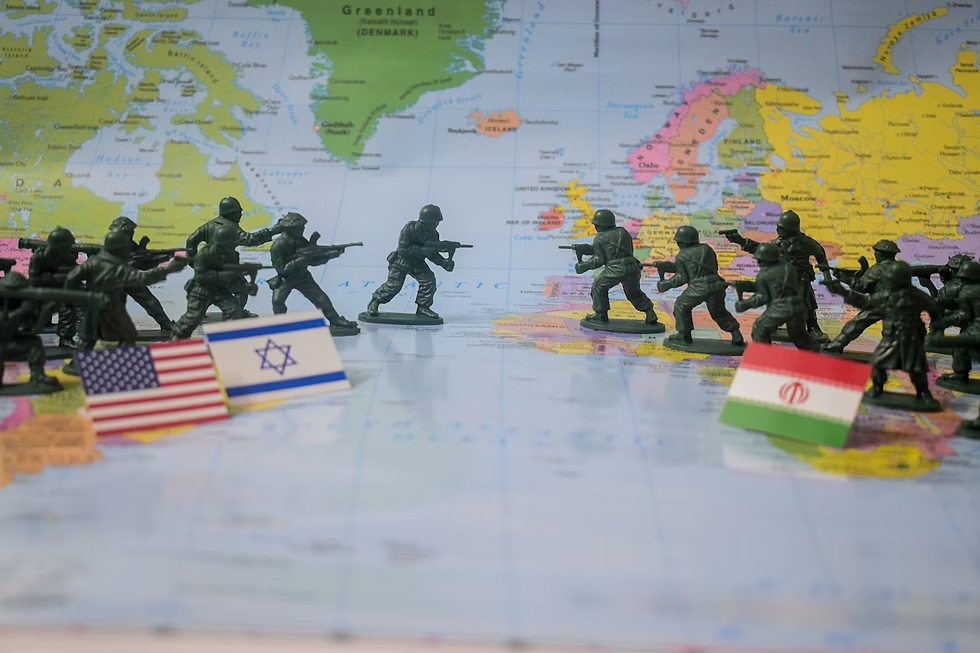
War is rarely just a game of arrogance and power. Resources and land are almost always at its centre, and therefore the environment is a fundamental consideration in the art of war. Image Credit: Saifee Art on Unsplash
At the time of writing, the war between the USA and Israel against Iran - known officially as Operation Epic Fury - has claimed somewhere between approximately 4000 and nearly 8000 lives and injured at least 40,000 people. 11 other Middle Eastern states have been dragged into these statistics. Officially, the conflict lasted around 40 days, beginning on the 28th February and ending on the 8th April with a ceasefire. In reality, moves and counter-moves between the US, Israel, Iran and their mediators are ongoing.
The human casualties of this war are without doubt a tragedy, and the ripple effects of the geopolitical and economic mess within which the region now finds itself will be felt for years to come. But amongst all this there is a further, more hidden catastrophe: that faced by the lands and waters of the Middle East, which struggle on in the face of decades of conflict.
Perhaps the most obvious environmental impact of war is carbon emissions. In the first 14 days of the war, one study estimated that the combined emissions of missiles, drones, damaged buildings, destruction and burning of fuel and the carbon lost through destroyed military vehicles released more than 5 million tonnes of CO2, greater than the annual emissions of Iceland. Extrapolate this estimation to 40 days and we end up with a total of nearly 15 million tonnes of CO2 emissions from one single conflict, a significant and damning contribution to the global climate crisis.
Both the wars in Iran and Ukraine have set precedents for the consequences of a global society that is addicted to fossil fuels: geopolitical blockades and instability resulting in higher oil prices and a higher cost of living overall. This serves to illustrate the value of an urgently-needed transition to renewable energy which can be produced cheaply and domestically with greatly reduced risk of price fluctuations in times of conflict.

Military activity produces carbon emissions. For this and other obvious reasons, use of this resource should be highly cautious and a last-resort measure. Recent global events make one wonder whether world leaders share this sentiment. Image Credit: Joshua Agbongua on Unsplash
However, carbon is not the only element we need to be concerned about when it comes to environmental harms during conflict. The Conflict and Environment Observatory (CEOBS), a research group dedicated to producing information on the intersection of environmental harm and war, had assessed at least 232 incidents of varied environmental damage in just the first 11 days of the war.
Military strikes and subsequent fires or explosions can produce toxic chemicals and contaminants including PFAS, heavy metals, as well as the fuel and oil itself. Fires can also release dioxins and furans, two groups of persistent organic pollutants that can be toxic to humans and other living organisms.
Any harmful impurities contained within oil, such as sulphur or nitrogen compounds, can cause acid rain and produce particulate matter pollution when that oil is burned. Attacks on Tehran's oil depots about a month ago resulted in acid rain and black, sooty smoke descending over the city, creating a choking atmosphere that kept local people indoors and created a terrifying apocalyptic darkness. Many people experienced burning sensations around their eyes, nose or throat and difficulty breathing.
Longer-term consequences of this exposure are also possible, according to Dr Shahram Kordasti, a haemato-oncologist originally from Iran: people with pre-existing heart disease, asthma and other lung conditions may get worse and exposure may even elevate people's risk of certain types of cancer. Water pollution and subsequent contamination of food is also a concern.
According to the CEOBS assessment, physical and chemical pollution in the marine environment from sunken vessels and port infrastructure has proven to be yet another issue associated with the war, especially considering one of the goals of the USA is to destroy the Iranian navy. This includes military ships in international waters, such as the Iranian Dena frigate that was recently torpedoed and produced a 20km oil slick off the coast of Sri Lanka.
Iran's southern coastline borders the ROPME Sea Area, the collective UN term for the combined waters of the Western Arabian Gulf, Gulf of Oman and Arabian Gulf. I used to live in Oman, just across the pond from Iran, and was lucky enough to see for myself the importance and beauty of the coral reef ecosystems found along Oman's coastline.
This region is a critical refuge for marine turtles and has some of the most thermally-tolerant coral reefs on Earth. However, this region is not only threatened by climate change, but also by a lack of the knowledge necessary to protect it. Research on these invaluable coral sites has been found to be short-term, fragmented and lacking in collaboration and scale.
Combine this with the marine pollution and degradation caused by the Iran-Kuwait war in 1991 and the impacts that a study by Aein Jamshid et al., (2011) indicates will follow current and future conflicts, and it is easy to see how war has and will continue to harm living systems across the region.
The impacts of the Iran-Kuwait conflict included oil pollution that resulted in bioaccumulation of contaminants in fish tissue, subsequent implications for local fisheries and contaminants in ocean sediment which were found to be more localised to immediate conflict zones. Contaminant compounds included petroleum hydrocarbons and toxic heavy metals such as cadmium, lead and nickel.
These same toxic heavy metals, along with cobalt and chromium, have been found in quantities exceeding EU safety guidelines in soil samples from other conflict areas in the Middle Eastern region, for example in this study carried out in Syria. These findings were linked to conflict both directly and indirectly. Chronic exposure to these metals through food grown in contaminated soil or through other means have been shown to increase the risks of cancer, organ system damage, neurological illness and many more problems.
Finally, and possibly most interestingly, war can have varying impacts on environmental governance and ecosystem protection. Deforestation and subsequent biodiversity loss may increase due to military and local activity, fires, bushmeat hunting to supplement food supply or emigration of animals due to noise and other war-related stressors. However, during the Iran-Iraq war, the conflict itself actually protected Iran's valuable Zagros forest region. Deforestation rates were relatively low beforehand but dropped during the conflict due to the fleeing of locals from the area.


This was a thought-provoking article that highlights an often-overlooked consequence of conflict: the lasting impact on the natural environment. I found it particularly interesting how the piece connects warfare with issues such as carbon emissions, pollution, habitat degradation, and long-term ecological damage, reminding readers that environmental recovery can take decades after a conflict ends. The discussion also reinforces the importance of considering sustainability and environmental responsibility alongside humanitarian concerns when assessing the true costs of war. This strongly connects to help with marketing assignment, as understanding how environmental issues are communicated to the public is an important aspect of modern marketing, particularly when organisations, governments, and advocacy groups seek to raise awareness, influence perceptions, and encourage action on global challenge